δ13C化合物特定同位素分析(CSIA)用於分析氣相烴和大氣氣體,以解釋氣體的微生物、熱成因或地質成因活動,並且比單純的濃度更能可靠地了解碳的來源。同位素分析的應用領域包括:
- 環境檢測用於區分產熱源、微生物源和非生物源。
- 追蹤微生物產甲烷作用
- 識別熱裂解、水力壓裂和天然氣特徵
- 監測土壤氣體、沼氣和垃圾掩埋氣的能源氣體項目
- 研究目的為提高沼氣或消化器效率
SGS Beta對烴類氣體的δ13C分析
SGS Beta提供下列氣體的專業分析:
燃燒前以色譜分離的單一氣體包括:
- 甲烷(CH4)
- 乙烷(C2H6)
- 丙烷(C3H8)
SGS Beta使用國際二級標準品(RM)來測定烴類氣體的化合物特定δ13C值。標準品來自美國地質調查局(USGS),該機構提供一系列甲烷、乙烷和丙烷作為標準氣體(HCG-1、HCG-2 和 HCG-3),以及NIST SRM 4990C草酸標準品。
以下舉例說明δ13C分析如何在現實世界的環境監測中應用。
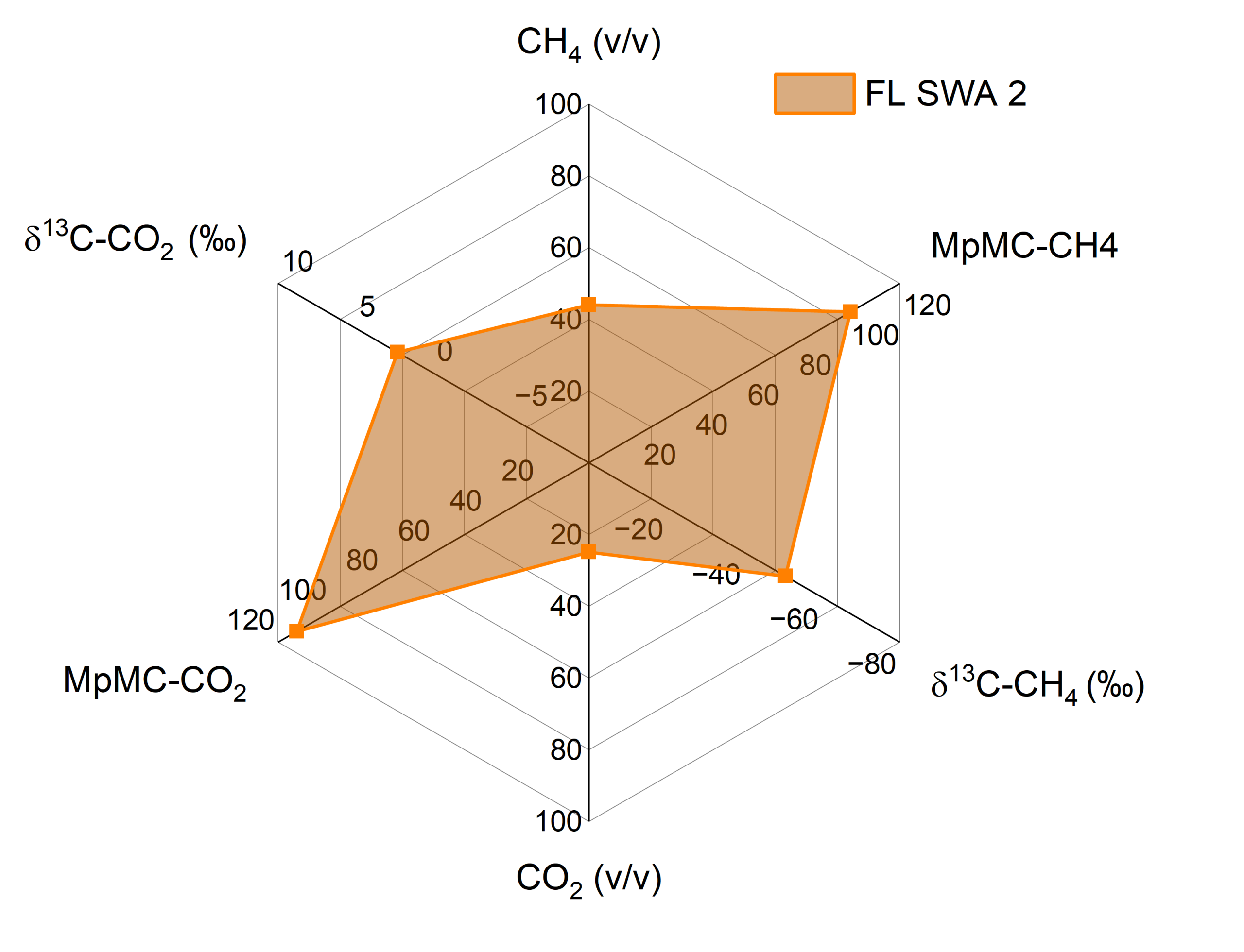
圖1:SGS Beta(研發部門)針對III類垃圾掩埋場火炬1進行了六項參數分析。
土壤氣體和垃圾掩埋場中CH4和CO2的δ13C分析
土壤氣體和垃圾掩埋場中CH4和CO2的δ13C分析已成為區分生物成因碳源和地質成因碳源的重要工具。土壤中的甲烷可能來自微生物產甲烷作用、化石燃料的熱成因洩漏,甚至非生物反應。這些過程都會經歷13/12C同位素分餾,從而產生δ13C特徵。例如,科學文獻載明,微生物途徑產生的甲烷的¹³C值最低,從-50‰至-110‰,熱成因氣體的δ13C值略低,於-30‰至-50‰之間,而非生物或地函來源的甲烷的δ13C值則相對偏高(-5‰至-30‰)。透過測量深度剖面中的δ13C,可以推斷甲烷的來源,即在厭氧條件下原位主動形成,或遷移的化石氣體污染淺層土壤。與CH4相比,成分中 CO2的δ13C可以提供關於碳循環和潛在污染的補充資訊。植物土壤呼吸產生的CO2在C3生態系中通常偏向負值(-22至-37‰),而在C4系統中消耗較少(-9至-15‰)。偏離這些範圍(例如δ13C值向0‰富集)可能表示碳酸鹽溶解或熱成因脫氣,而非根系或微生物呼吸作用。此外,也觀察到垃圾掩埋氣中CO2成分的δ13C值富集範圍為-10‰至+15‰。
乙烷和丙烷中的δ13C分析
C對乙烷(C2H6)和丙烷(C3H8)進行13分析,可以為解釋甲烷等氣體的起源提供關鍵背景。由於這些高鏈烴很少透過微生物途徑產生,因此它們的存在和同位素組成可作為熱成因或非生物過程的關鍵指標。在環境和能源應用中,乙烷和丙烷中富集的δ13C值可以幫助區分化石燃料洩漏或水力壓裂對純微生物產甲烷作用的影響,而CH4, C2H6和C3H8之間的相對變化揭示了氣體混合、遷移和污染途徑。典型的熱成因乙烷和丙烷值平均約為-30‰(範圍約為-60‰至-16‰),而非生物來源可能相對富集(有時接近-5‰),而微生物系統的特徵是這些氣體不存在或僅有微量。SGS Beta透過對甲烷、乙烷和丙烷進行綜合分析,提供化合物特異性的同位素指紋,為來源歸因、環境監測和石油系統研究提供強大的框架。
14C和δ13C雙同位素分析
δ13C可以指示形成途徑;然而,將其與14C結合起來,可以提供過程和年齡信息,從而創建一個強大的雙同位素框架。透過將δ13C分析與放射性碳(14C) 測量相結合,可以確定碳氫化合物和相關大氣氣體 (CO和CO2)的14C活性(或年齡)、來源和歸宿。樣品可採用ASTM D6866生物烴氣體14C測試進行分析和報告,或提交放射性碳分析測量並報告pMC (MpMC)、常規 pMC(CpMC)、BP表觀放射性碳年齡和δ13C.
準備好提出樣品進行測試了嗎?
請聯絡您的客戶經理或發送電子郵件至US.Info.Beta@sgs.com以取得化合物特定同位素分析問卷,問卷必須在提交樣本之前填寫完畢、提交並獲得我們實驗室團隊的批准。您也可以要求使用ASTM D7833進行氣相層析分析,以及我們的甲烷、乙烷、丙烷和總碳(整體氣體)樣品的同位素測試服務。
樣品體積和容器要求: 2%(v/v)裝於0.6L多層鋁箔氣袋或加壓IsoTube中。
請點擊此處查看完整的氣體樣品提交指南。
如有任何疑問或需了解更多信息,請聯繫我們:US.Info.Beta@sgs.com.
參考文獻:
- Whiticar, M. J. (1999). Carbon and hydrogen isotope systematics of bacterial formation and oxidation of methane. Chemical Geology, 161(1–3), 291–314. https://doi.org/10.1016/S0009-2541(99)00092-3
- Reddy, C. M., et al. (2002). Radiocarbon as a tool to constrain the origins of methane in natural waters. Environmental Science & Technology, 36(19), 4244–4250.
- Etiope, G., & Sherwood Lollar, B. (2013). Abiotic methane on Earth. Reviews of Geophysics, 51(2), 276–299. https://doi.org/10.1002/rog.20011
Cerling, T. E., & Quade, J. (1993). Stable carbon and oxygen isotopes in soil carbonates. In: Climate Change in Continental Isotopic Records (AGU Monograph 78), 217–231.
Amundson, R., et al. (1998). Soil carbon dioxide and its isotopic composition: Implications for global carbon cycle. Global Biogeochemical Cycles, 12(2), 195–210. https://doi.org/10.1029/98GB00742
Chanton, J. P. (2005). The effect of gas transport on the isotope signature of methane in wetlands. Organic Geochemistry, 36(5), 753–768. https://doi.org/10.1016/j.orggeochem.2004.10.007
Bakkaloglu, S., Lowry, D., Fisher, R. E., France, J. L., & Nisbet, E. G. (2022). Landfill methane emissions: characterisation using isotopic signatures. Waste Management, 139, 65–75. https://doi.org/10.1016/j.wasman.2021.12.004
Bergamaschi, P., Lubina, C., Königstedt, R., Fischer, H., Veltkamp, A. C., & Zwaagstra, O. (1998). Stable isotopic signatures (δ13C, δD) of methane from European landfill sites. Journal of Geophysical Research: Atmospheres, 103(D7), 8251–8265. https://doi.org/10.1029/97JD03615
Bowling, D. R., Pataki, D. E., & Randerson, J. T. (2003). Carbon isotopes in terrestrial ecosystem pools and CO2 fluxes. New Phytologist, 157(2), 269–285. https://doi.org/10.1046/j.1469-8137.2003.00698.x
Chen, D., Shen, J., Zhang, Y., Chen, Y., Huang, C., & Li, Y. (2011). δ13C signature of carbon dioxide emissions from biogas digestate applied soil. Soil Biology and Biochemistry, 43(4), 1030–1033. https://doi.org/10.1016/j.soilbio.2010.12.015
Ehleringer, J. R., Buchmann, N., & Flanagan, L. B. (1997). Carbon isotope ratios in belowground carbon cycle processes. Ecological Applications, 7(3), 1067–1078. https://doi.org/10.1890/1051-0761(1997)007[1067:CIRIBC]2.0.CO;₂
Hackley, K. C., Liu, C. L., & Coleman, D. D. (1996). Environmental isotope and dissolved gas indicators of landfill gas effects on groundwater. Ground Water, 34(1), 76–82. https://doi.org/10.1111/j.1745-6584.1996.tb01867.x
Levin, I., Glatzel-Mattheier, H., Marik, T., Cuntz, M., & Schmidt, M. (1993). Verification of methane emission from German landfills using stable isotope analysis. Journal of Geophysical Research: Atmospheres, 98(D3), 5195–5206. https://doi.org/10.1029/92JD02225
Smith, C., Jensen, L. S., & Andersen, J. M. (2015). The effect of biogas plant residues on soil carbon dioxide emissions and carbon isotopes. Waste Management, 44, 190–197. https://doi.org/10.1016/j.wasman.2015.07.027
Whiticar, M. J. (1999). Carbon and hydrogen isotope systematics of bacterial formation and oxidation of methane. Chemical Geology, 161(1–3), 291–314. https://doi.org/10.1016/S0009-2541(99)00092-3
Ni, Yunyan et al. (2025) Application of carbon and hydrogen isotopes in the study of natural gas origins. Journal of Natural Gas Geoscience, 10(2), 75-85. https://doi.org/10.1016/j.jnggs.2025.02.001
相關主題: 2026年4月
