Join our FREE webinar: Integrating Radiocarbon and Isotope Analysis in Quaternary Research
September 17, 2026 (11 AM EST)
Unless otherwise requested by a submitter or discussed in a final report, the following procedures apply to pretreatment of samples submitted for radiocarbon dating. This glossary defines the pretreatment methods applied to each sample listed on the report (e.g. you will see the designation “acid/alkali/acid” listed along with the result for a charcoal sample receiving such pretreatment).
Pretreatment of submitted materials is required to eliminate secondary carbon components. These components, if not eliminated, could result in a radiocarbon date that is too young or too old. Pretreatment does not ensure that the radiocarbon date will represent the time event of interest. This is determined by the sample integrity.
Effects such as the old wood effect, burned intrusive roots, bioturbation, secondary deposition, secondary biogenic activity incorporating recent carbon (bacteria), and the analysis of multiple components of differing age are just some examples of potential problems in carbon 14 measurement. Pretreatment is done to reduce the sample to a single component, where possible, and to minimize the added subjectivity associated with these types of problems. If you suspect your sample requires special pretreatment considerations, be sure to tell the laboratory prior to radiocarbon analysis.
In what instances would SGS Beta advise a client that the sample is unlikely to yield a reliable date?
Disclaimer: This video is hosted in a third-party site and may contain advertising.
Important Note on Pretreatment – It is important to understand the pretreatments which are going to be applied to your samples since they directly affect the final result. You are welcome to contact us to discuss the pretreatment or request that we contact you after the pretreatment (and prior to dating) to discuss.
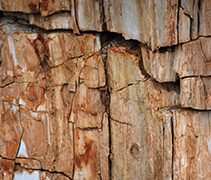 Before radiocarbon dating, the sample is first gently crushed then dispersed in deionized water. It is then washed with hot HCl acid to eliminate carbonates followed by an alkali wash (NaOH) to remove secondary organic acids. The alkali wash is followed by a final acid rinse to neutralize the solution before drying.
Chemical concentrations, temperatures, exposure times, and number of repetitions depend on the sample submitted. Each chemical solution is neutralized prior to application of the next. During these serial rinses, mechanical contaminants such as associated sediments and rootlets are eliminated.
This type of pretreatment is considered a “full pretreatment.” On occasion, the report will list the pretreatment as “acid/alkali/acid – insolubles” to specify which fraction of the sample was analyzed for radiocarbon content.
Typically applied to – charcoal, wood, some peat, textiles
On occasion, the alkali soluble fraction will be analyzed for radiocarbon content. This is a special case where soil conditions imply that the soluble fraction will provide a more accurate date. It is also done to verify the presence/absence or degree of contamination due to secondary organic acids.
The sample is first pretreated with acid to remove any carbonates and to weaken organic bonds. After the alkali washes are used (see acid/alkali/acid above), the solution containing the alkali soluble fraction is isolated/filtered and combined with acid. The soluble fraction, which precipitates, is rinsed and dried prior to combustion.
After a full acid/alkali/acid pretreatment, the sample for radiocarbon dating is bathed in sodium chlorite (NaClO2) under controlled conditions (pH 3 and temperature at 70°C). This procedure eliminates all components except wood cellulose.
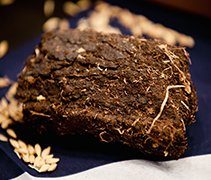 Surface area of samples for carbon dating is increased as much a possible. Solid chunks are crushed, fibrous materials are shredded, and sediments are dispersed. Acid (HCl) is applied repeatedly to ensure the absence of carbonates.
The uniqueness of the sample and the degree of contamination dictate the chemical concentrations, temperatures, exposure times, and number of washings. Alkali washes are not done to ensure isolation of the primary carbon which is soluble in the alkali.
Carbon 14 dating results reflect the total organic content of the analyzed material, and the accuracy depends on the researcher’s ability to subjectively eliminate potential contaminants based on contextual facts.
Typically applied to – organic sediments, some peats, small wood or charcoal, and special cases
The material for carbon dating is first tested for friability (“softness”). Very soft bone material is an indication of the potential absence of the collagen fraction (basal bone protein acting as a “reinforcing agent” within the crystalline apatite structure).
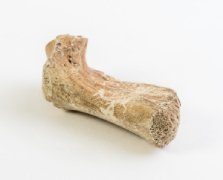 The bone samples for radiocarbon analysis is washed with deionized water, the surface scraped free of the outermost layers, and then gently crushed. Dilute, cold HCl acid is repeatedly applied and replenished until the mineral fraction (bone apatite) is eliminated. The collagen is then dissected and inspected for rootlets. Any rootlets present are also removed when replenishing the acid solutions.
“With alkali” refers to additional pretreatment with sodium hydroxide (NaOH) to ensure the absence of secondary organic acids. “Without alkali” refers to the NaOH step being skipped due to poor preservation conditions, which could result in removal of all available organics if performed.
Typically applied to – bones
The calcareous material is first washed with deionized water, removing associated organic sediments and debris, where present. The material for radiocarbon dating is then crushed/dispersed and repeatedly subjected to HCl etches to eliminate secondary carbonate components.
 In the case of thick shells, the surfaces are physically abraded prior to etching until the hard, primary core remains. In the case of porous carbonate nodules and caliche, very long exposure times are applied to allow infiltration of the acid. Acid exposure times, concentrations, and number of repetitions are applied according to the uniqueness of the sample.
Typically applied to – shells, caliche, calcareous nodules
Carbonates precipitated from groundwater are usually submitted in an alkaline condition (ammonium hydroxide or sodium hydroxide solution) prior to radiocarbon dating. Typically this solution is neutralized in the original sample container using deionized water. If larger volume dilution is required, the precipitate and solution are transferred to a sealed, separatory flask and rinsed until neutral. Exposure to atmosphere is minimal.
Typically applied to – strontium carbonate, barium carbonate (i.e. precipitated groundwater samples)
The sample for radiocarbon analysis is subjected to a series of solvent baths typically consisting of toluene, hexane, and acetone. This is usually performed prior to acid/alkali/acid pretreatments.
Applied to – textiles, prevalent or suspected cases of pitch/tar contamination, conserved materials
No laboratory pretreatments were applied before radiocarbon dating. Special requests and pre-laboratory pretreatment usually account for this.
How much does carbon dating cost
How to send samples to SGS Beta
Why does quality assurance matter in radiocarbon dating?
Disclaimer: This video is hosted in a third-party site and may contain advertising.
Page last updated: August 2022
