 Carbon Dating Services
 Analyses included with Carbon-14 Dating (if sample size permits)
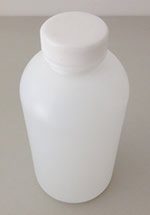
 Recommended container


To request a quote or formal estimate, please send these details—number of water samples for analyses, service requested/turnaround time (AMS Standard, Priority or Time Guide) and the paying institution’s billing address.
SGS Beta is offering Oxygen-18 and Deuterium stable isotope measurements for water samples at no additional cost for samples submitted for radiocarbon dating. These analyses can also be ordered on a standalone basis without radiocarbon dating. Techniques used to measure d18O and d2H ratios are Isotope Ratio Mass Spectrometry (IRMS) and Cavity Ring-down Spectroscopy (CRDS).
SGS Beta is a NATURAL Level 14C dating laboratory and we cannot accept water samples that have been collected from any area that is near to a nuclear power plant, commercial or medical reactors, industrial/medical waste disposal sites or from within their drainage areas. The samples must not be stored or handled in any laboratory or area that uses OR has ever used biomedical or artificially labeled 14C at any time.
Should you suspect that the water may in any way have elevated 14C activities above peak Bomb Carbon levels (~200 pMC / 2.0 F14C), DO NOT send the samples for testing. Water samples that produce activities above 200 pMC will incur extensive costs related to any cleanup necessary, equipment replacement and duplicate analyses required for other samples. These costs could easily run into the tens of thousands of dollars, which will be CHARGED to you as the SUBMITTER.
We cannot accept water samples that have been treated with mercuric chloride (HgCl2) or sodium azide (NaN3) because we do not have the disposal capabilities for these toxic substances.
We no longer accept samples that have NaOH or other alkali chemicals added to the sample. This was a necessary step for the SrCO3 / BaCO3 precipitation method, but it is not compatible with the gas strip method used by our laboratory.
Disclaimer: This video is hosted in a third-party site and may contain advertising.
This video excerpt is part of SGS Beta’s webinar: Isotopes in Hydrology
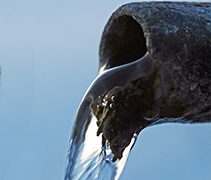
1. Collect water at the wellhead.
2. Before beginning the collection from the wellhead/spigot, allow the water to run for sufficient time so that the water being collected has come directly from the aquifer. Depending on the depth of the well, this may be several minutes or longer.
3. Allow the well water to flush out the inside of the bottle thoroughly and then dump the contents prior to refilling.
4. Fill the bottle with as little head space as possible but leave the neck of the bottle empty to allow for any expansion during shipment.
5. Place a tape seal around the cap/bottle joint to prevent exchange or loss of CO2 from the water.
– Please mark the bottle with the appropriate sample identification number in indelible ink or on a non-removable tamper-proof label.
– Measure the pH upon collection and send the info to us (not required).
– There is no need to refrigerate stored water samples.
– For turbid water samples, you must filter out any debris prior to submitting the sample using 0.7-micron glass fiber filter paper.
– Do not add any chemicals to the water upon collection.
Since studies have shown that storing groundwater for long periods of time in Polypropylene (PP) bottles can induce isotopic effects1 , we recommended that water (DIC) samples be sent to the laboratory for testing within 30 days of collection. If water samples need to be stored for longer periods of time, they should be collected and stored in glass or Polyacrylonitrile (PAN) plastic bottles.
Before placing the bottles in a sturdy cardboard box, please put the bottles inside a plastic bag and seal the bag with a zip-tie or duct tape. If any of the bottles leak during shipment, the water will not weaken the box. Please use a box with sufficient packing to prevent breakage during shipment.
We recommend commercial courier or registered first-class mail when sending the samples to the lab. Please email the courier and tracking number so we can monitor your package.
Radiocarbon analysis of groundwater can be a monitoring tool to prevent the over-pumping of the aquifer before it becomes contaminated or overexploited. Contrary to theoretical models and after-the-fact contamination data from chemical analysis, natural level radiocarbon analysis “offers empirical data that can be used” to make decisions on the future of water districts before damage is done.
Groundwater radiocarbon dating is used in combination with the primary measurements of classical hydrological and chemical analyses. Groundwater dating will produce the best results when it involves multiple measurements or sequential sampling. The most useful data come from these comparisons and not from absolute ages.
For multiple measurements, the apparent ages of the groundwater taken from pumps that are at varying distances from the aquifer outcrop could be a means of verifying flow rate and also indicate situations of over-pumping.
For sequential sampling of an individual well every six or twelve months, any changes in the apparent age of the water are plotted versus time. If the age of the water is getting younger as monitoring progresses, it would usually be due to a drawing-down of the more shallow water layers. Radiocarbon dating has the potential of giving advance notice of impending contamination by surface layer waters.
Read more about Groundwater Radiocarbon Dating
Reference:
1. Secular change of stable carbon isotopic ratio in groundwater samples during their storage in laboratory, Takahashi H., Handa, H., Minami, M., Aramaki T., Nakamura, T., Japan Geoscience Union Meeting 2015.
Interested in Boron, Lead or Strontium isotopes analysis? Visit www.isobarscience.com.
Page last updated: March 2026

 Sample size recommended (smaller AMS sizes possible – please